

Align stakeholders for ownership
Robust solutions to complex problems
Accelerate timeframes


“Leadership is the phrase that comes to mind when I think about Daniel.”

“I have no hesitation in recommending Daniel as a change leader and workshop facilitator.”

Change management is the focus on the people side of any organizational change. That could be process improvement, implementing new technologies or reorganizing to respond to market trends,
To ensure your organizational change is successful you need a structured approach to implementing change.
Everything you need to know about the Change Management Process has been defined here, in one easy-to-implement guide.
Today, I’m inviting you to share in my success using my step-by-step change management process.
Successful change programs don’t just happen. Well-embedded change programs that are accepted, sustainable and deliver results are an outcome of careful planning followed by an implementation that is well-managed.
Ideal results do show up. Never by accident, though.
You get results because of good planning and flexible execution. To start with, planning for successful change management involves:
In fact, I recently used this strategy for the end-to-end change of the Banking Project affecting over 200,000 customers. This included the change strategy, stakeholder management, communications, and training design.
My five-step change management process from business case to organizational design has five sequential steps.
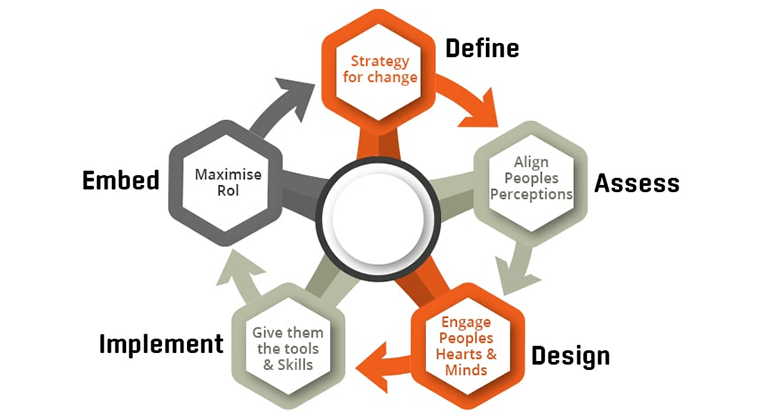
The formula takes hard work. But it’s not complicated. And it’s one of the fastest ways I’ve discovered to quickly implement change.
If you want to get access to this strategy (including examples and case studies of my change management process in action), just enter your email address below and I’ll send it over.